Expert of Systematic Overall Solution for Calcium Material Resource Utilization


Calcium Hydroxide Production Line
Production Line Introduction:Calcium hydroxide, commonly known as slaked lime or hydrated lime, is produced by digesting quicklime with water. Calcium hydroxide is a product with high specific surface area, high fineness, high activity, high whiteness, and low cost. There are mainly two production processes: dry method and wet method, which differ slightly in process but are consistent in principle. The formula is: CaO (calcium oxide) + H2O (water) = Ca(OH)2 (calcium hydroxide).
Production Capacity:20,000 tons 200,000 tons/year
Raw Materials:Calcium carbonate

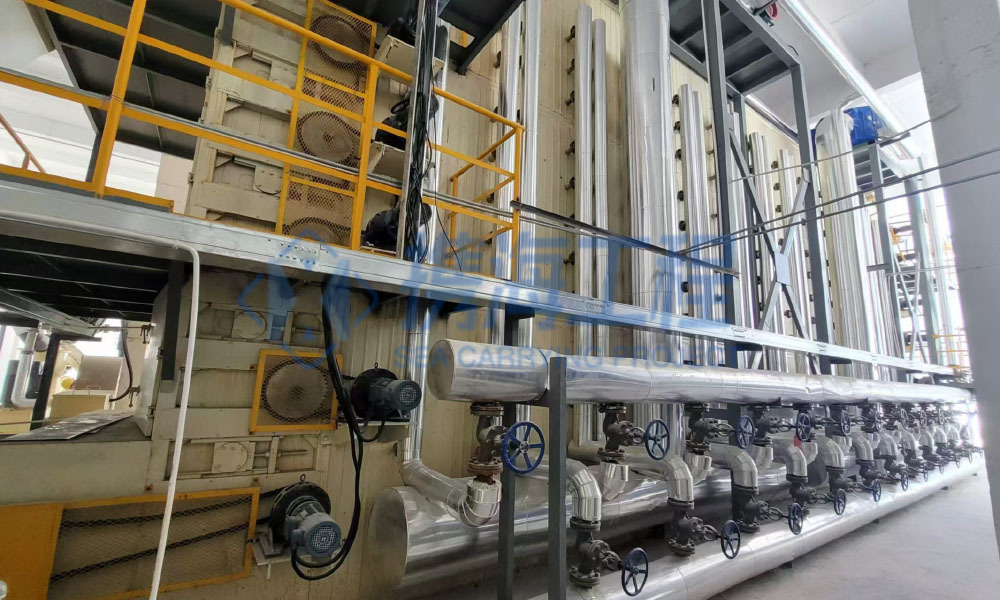
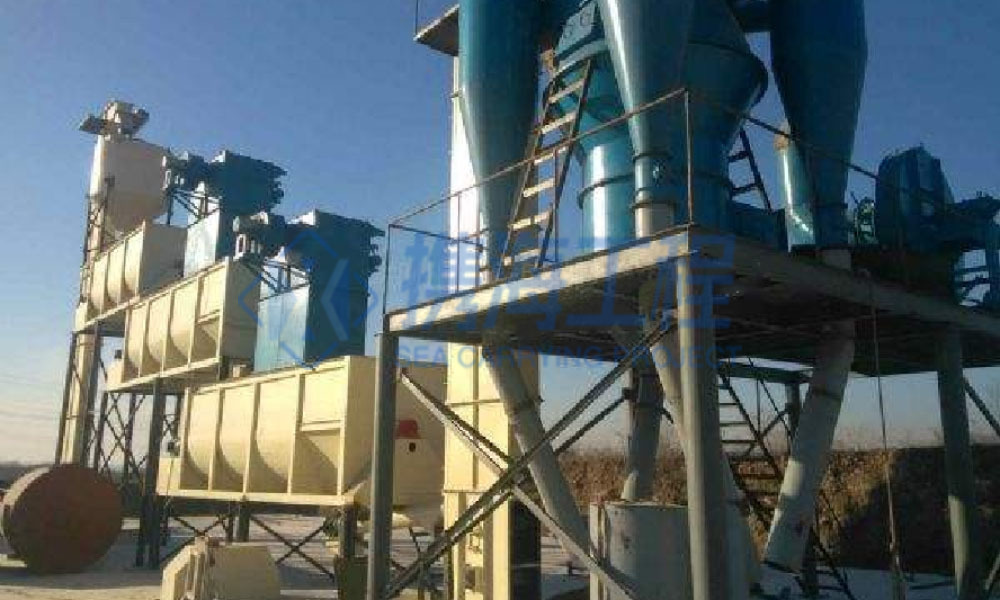
Prominent Advantages
(1) The construction of the calcium hydroxide production line has low investment costs and stable product quality.
(2) Digester conversion rate: ≥95%
(3) The main quality of calcium hydroxide is high, and the operating cost is low.
Process Flow
The calcium hydroxide production line consists of three parts: the quicklime crushing section, the digestion system section, and the storage and transportation section.
① Quicklime Crushing: Quicklime must be crushed into particles smaller than 10mm before entering the next process. Incoming quicklime is directly dumped into the quicklime receiving hopper by dump trucks, and is evenly fed into the belt conveyor by an electromagnetic vibrating feeder, which then sends it to the hammer crusher. The crushed material is reduced to particles smaller than 6mm and is then sent to the intermediate storage bin by a bucket elevator. Dust generated during the conveying and crushing process is handled by a pulse dust collector.
② Digestion System: The digestion part of calcium hydroxide includes two main sections: one is the process of digesting quicklime into calcium hydroxide; the other is the separation and grinding of the produced calcium hydroxide.
Digestion Process: The quicklime powder stored in the intermediate storage bin flows through a gate valve, is weighed by an electronic belt scale, and enters a three-stage integrated digester through an electric double-layer flap valve. Meanwhile, clean water stored in a water tank is pumped to the water control cabinet by a frequency-controlled water pump. The water, measured by an electromagnetic flow meter, is processed by a computer and tracked in proportion to the quicklime measured by the electronic belt scale. The measured water is distributed to the dedicated nozzles of the digester and enters the digester simultaneously with the quicklime. The amount of water is controlled by a PLC system. After the quicklime and water are introduced into the digester, they react according to the following equation: Ca + H2O → Ca(OH)2 + heat. The digester consists of a three-stage digester and a dust collector. The first-stage digester is composed of a double shaft, where the stirring and mixing action of the stirring shaft causes a vigorous chemical reaction. The mixed and initially digested material gradually flows into the second-stage digester, which consists of a single shaft, where the material undergoes further digestion. The material is completely digested here, absorbing residual moisture and reducing the material temperature. The rotation speed of the first-stage digester is frequency-controlled and adjusted according to the quality and output of the quicklime. During the digestion process, about 50% of the water is used for hydrolysis, while the remaining water is vaporized by the heat released during the reaction. The generated steam, along with slaked lime dust and air, is sucked into a dedicated dust collector for calcium hydroxide, and the dust concentration in the treated exhaust gas is less than 30mg/Nm3. The fully digested material flows into a screw conveyor for the separation and grinding process.
Separation and Grinding Process: The material coming out of the digester passes through an electric lock air device and enters a tubular screw conveyor. It is then sent to the separator by a bucket elevator. The separator divides the material into two parts based on different finished product particle size requirements: the finished product that meets the particle size requirements and the coarse powder that does not meet the requirements. The finished product that meets the requirements is collected by the fine powder collector attached to the separator, sent through an electric lock air device to a screw conveyor, and then to a bucket elevator, and finally into the finished product warehouse. The coarse powder that does not meet the requirements is also divided into two parts. The coarse powder is screened by a vibrating screen, with particles larger than 2mm falling into a large material warehouse to be returned to the digestion system for further digestion. The material smaller than 2mm and the medium coarse powder separated by the classifier fall into the coarse powder warehouse for temporary storage. Then, through a gate valve, it is fed into the ball mill by a frequency-controlled impeller feeder. The ground material flows into a tubular screw conveyor, passes through an electric lock air device, and is evenly sent into the separator by a high-pressure fan for separation. The finished product that meets the particle size requirements is collected by the fine powder collector, sent through an electric lock air device to a screw conveyor, and then to a bucket elevator, and finally into the finished product warehouse. The coarse powder that does not meet the requirements is sent back to the ball mill for grinding through an electric lock air device and a screw conveyor.
③ Storage and Transportation Process: The calcium hydroxide finished product stored in the finished product silo is packaged by a double-spout packaging machine or a ton bag packaging machine, or loaded into bulk trucks by a bulk dispensing system.

Technical Parameters
| Production Capacity (10,000 tons/year) | 2 ⁓ 100 |
| Quality Performance Standards | Ca(OH)2 Content: 90~98% Moisture Content: ≤1.0% Product Granularity: Adjustable from 200 mesh to 325 mesh according to customer requirements Specific Surface Area: 15~18m2/g Whiteness ≥95% |
| Product Granularity | Customizable according to customer requirements |
| Number of Working Days per Year/Day | ≥330 |
| Number of Operators/(people/shifts) | 5 ⁓ 50 |
Get more solutions for free
If you are interested in our products, please leave your email, we will contact you as soon as possible, thank you!


Telephone
Company Address
Weier Business 801, No. 92 Huai'an East Road, Yuhua District, Shijiazhuang City, Hebei Province