Expert of Systematic Overall Solution for Calcium Material Resource Utilization

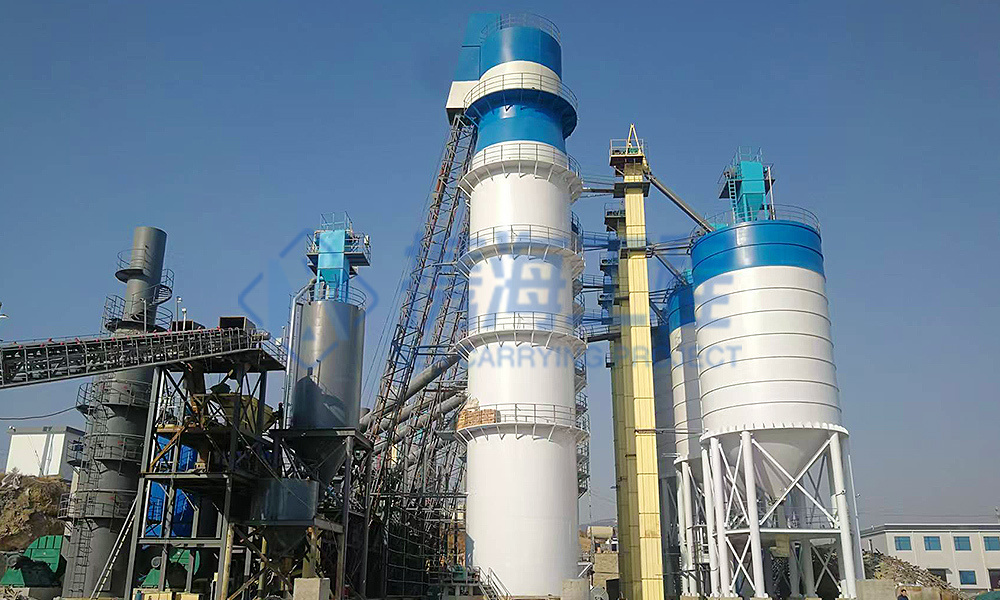
mechanical vertical kiln
Production Line Introduction:The lime vertical kiln production line is a new type of mechanized vertical kiln improved based on decades of practical experience in the country. The mechanized and environmentally friendly lime kiln adheres to the principles of standardization, serialization, and generalization, always prioritizing product quality to meet user needs. The design of this lime kiln is reasonable, solving the wall effect, enhancing insulation, and reducing heat loss. The coal consumption per ton of lime is about 120 kg of standard coal, with a calcination rate of over 90% and an activity of about 320 ml (titration with 4NHCl for 10 minutes). It better meets the process requirements for high-quality products, saves energy, reduces consumption, and cuts costs.
Production Capacity:50 tons to 500 tons per day
Fuel:Coke, smokeless lump coal, smokeless spherical coal.
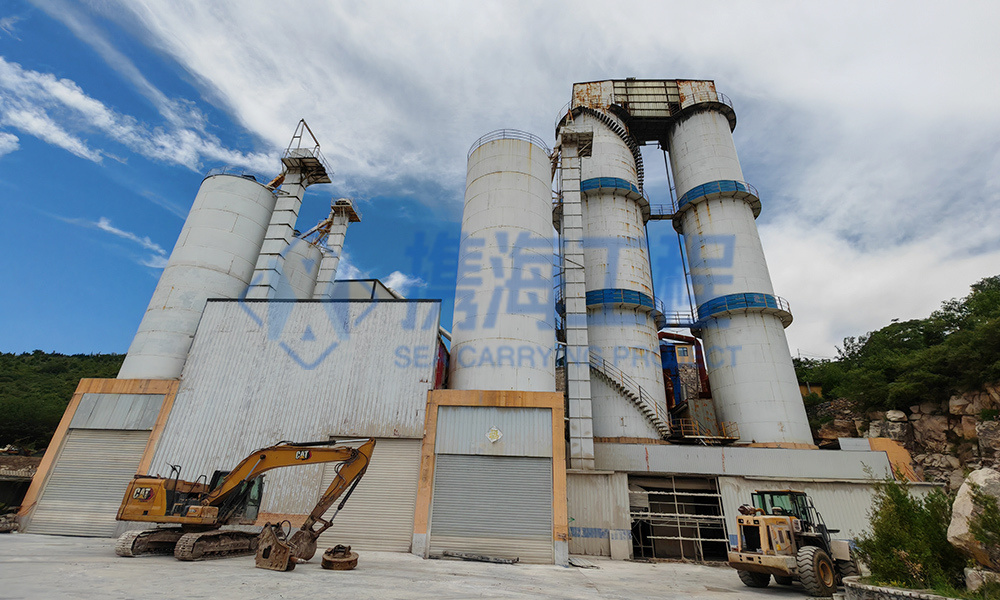
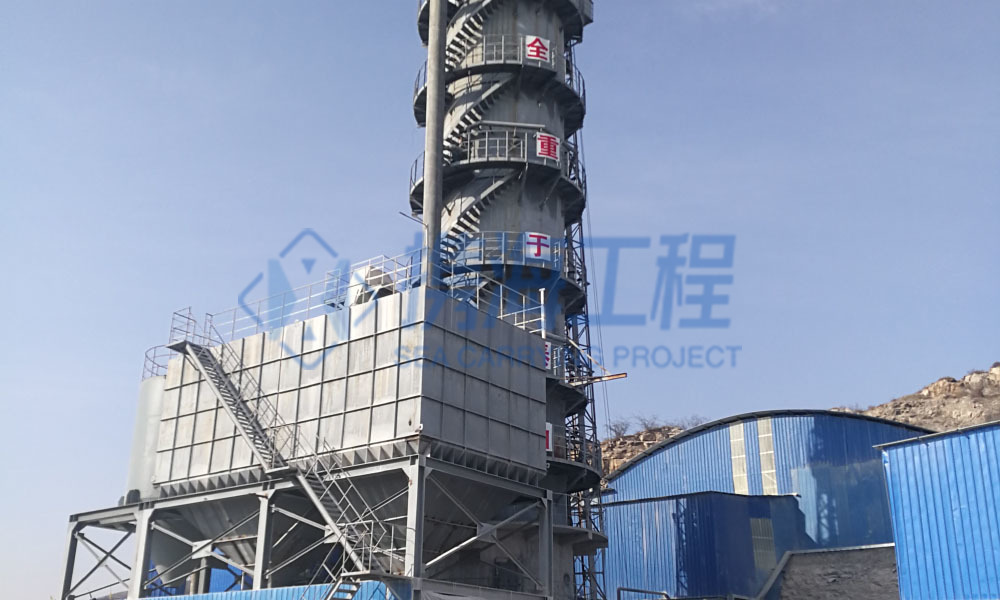
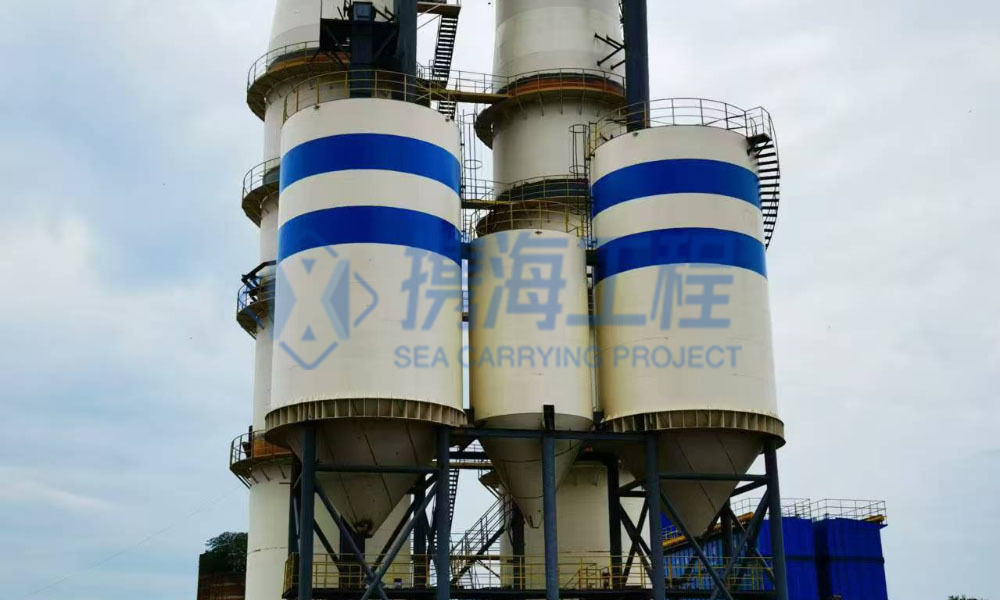
Prominent Advantages:
(1) The mechanized vertical kiln has a small investment, average output, and is easy to operate.
(2) The kiln body is simple, the furnace lining is simple, and the construction is simple, ensuring that the vertical kiln masonry is solid and reliable.
(3) Saves coal and electricity, with high stability.
(4) The concentration of carbon dioxide in the flue gas at the kiln tail is high and easy to recover.
(5) The equipment has a long overhaul cycle, and there are fewer types of easily damaged parts.
Process Flow:
(1) Limestone and Raw Coal Batching System
Qualified limestone is transported by a loader to the limestone storage, and raw coal is transported from the raw coal yard to the raw coal storage. To ensure uniform calcination quality of active lime and sufficient gas production, the design requires limestone block size of 50-120mm, with (less than 50mm <5%, greater than 120mm <5%). Coal block size: 25-50mm.
The limestone and raw coal storage are equipped with vibrating feeders, which unload to the limestone and raw coal weighing hoppers, and then the materials are conveyed to the kiln front buffer hopper through the batching belt. The vibrating feeder and weighing hopper are interlocked; when the weighing hopper reaches the set value, the vibrating feeder stops working, then the batching belt operates, and the weighing hopper unloads. After unloading, the hopper door closes, and the vibrating feeder starts working again, cycling in this manner. Ultimately, limestone and raw coal are conveyed to the buffer hopper in a certain proportion through the batching belt.
(2) Charging System
When the kiln body level gauge indicates that charging is needed, the buffer hopper discharge door automatically opens to load the charging cart, with a delay of 2-5 seconds before starting the winch. The winch pulls the material cart up the inclined bridge track, and when the cart reaches the top of the kiln, the mixed material is loaded into the kiln through a rotating distributor.
The charging system mainly consists of an inclined bridge, a 10-ton electric winch, a material cart, a balance cart, steel wire ropes, and guide pulleys. The inclined bridge is at an angle of 71°50' to the horizontal, with 18Kg/m light rails laid on it as the track for the material cart. To prevent the material cart from tipping over during operation, pressure rails are also laid on the inclined bridge.
To achieve accurate automatic control, two limit switches are installed on the inclined bridge: one is installed at the balance cart to stop the material cart in time when it reaches the top of the furnace; the other is installed at the material loading point, which activates when the material cart contacts the limit switch, causing the cart to stop.
(3) Active Lime Calcination System
First, the crushed limestone (60-120mm) and lump coal (20-40mm) are mixed in a certain proportion and loaded into the material cart. The cart is sent to the top of the furnace by the winch from the lower end of the inclined bridge, where the material is dumped into the funnel of the rotating distributor. The rotating distributor then rotates at a certain angle, and when the material cart begins to descend, the material bell opens, allowing the mixed material to flow into the furnace. Cold air flows into the furnace from the bottom under a certain pressure through the air distribution chamber and the cone inner air duct, and then rises vertically from the wind cap, first encountering the calcined lime for heat exchange, cooling the lime and absorbing heat. The hot air then rises to assist combustion in the calcination zone, where calcium carbonate (limestone) decomposes.
Decomposition formula: CaCO3 = CaO + CO2
The generated calcium oxide slowly and uniformly descends in the furnace with the rotation of the screw discharger, and is cooled by cold air. The working principle of the screw discharger is that when the motor-driven screw rotates at a speed of 0.27r/min, the lime is uniformly pushed radially outward to the ash tray under the action of the screw table. The lime on the ash tray is scraped into the discharge chute by the scraping board as the tray rotates, and is sent to the belt conveyor via the discharge pipe. Meanwhile, the rising carbon dioxide exchanges heat with the newly added mixed material through the preheating layer, and is then sent to the bag filter for primary dust removal, resulting in a dust concentration of 30mg/m3.
(4) Finished Product Storage and Transportation System
The finished lime is then transported to the lime finished product warehouse via a bucket elevator, and the lime in the warehouse is unloaded onto trucks through the bottom unloading valve for regular transportation.
(5) Flue Gas Treatment System
The high-temperature flue gas generated by the burning of lime in the mechanical vertical kiln is treated through desulfurization and denitrification devices before entering the bag filter. After dust removal, the flue gas is discharged into the atmosphere by a high-temperature fan, with a dust concentration of less than 10mg/m3. The SO2 and NOX concentrations in the flue gas meet the environmental discharge requirements of the project location.
Process Flow Diagram

Technical Parameters:
Production Capacity (t/d) |
100 |
200 |
300 |
400 |
500 |
Main Equipment |
Main Supporting Equipment Models and Technical Economic Indicators |
||||
Kiln Inner Diameter (m) |
3.5 |
4.2 |
4.8 |
5.3 |
6 |
Effective Volume (m³) |
180 |
300 |
450 |
540 |
700 |
Calcination Temperature (℃) |
1100±50 |
||||
Energy Consumption Index (kCal/kg) |
1000±100 |
||||
Electricity Consumption Index (kW·h/t) |
25±5 |
||||
Limestone: Lime |
1.7⁓1.78 : 1 |
||||
Lime Overburning Rate (%) |
≤12 |
||||
Lime Activity (ml) |
250⁓300 (specific to limestone composition) |
||||
Ash Discharge Temperature (℃) |
Ambient Temperature +60 |
||||
Limestone Granularity Entering Kiln (mm) |
30⁓120 |
||||
Flue Gas Emission Concentration (mg/Nm3) |
≤10 |
||||
Carbon Dioxide Concentration (%) |
34⁓40 |
||||
Annual Working Days / Days |
>=335 |
||||
Number of Operators (person/class) |
2⁓3 |
||||
Applicable Fuels |
Coke, Smokeless Block Coal, Smokeless Coal Balls |
||||
Get more solutions for free
If you are interested in our products, please leave your email, we will contact you as soon as possible, thank you!


Telephone
Company Address
Weier Business 801, No. 92 Huai'an East Road, Yuhua District, Shijiazhuang City, Hebei Province