Expert of Systematic Overall Solution for Calcium Material Resource Utilization


PCC production line
Production Line Introduction:Light calcium carbonate (PCC), also known as industrial precipitated calcium carbonate, is a white fine powder, commonly referred to as "light calcium." It is produced using high-calcium limestone as raw material, through processes such as calcining lime, digesting lime, and carbonating lime, employing a chemical synthesis method to create micron-sized calcium carbonate powder. The surface of the calcium carbonate particles is treated with wet or dry activation, resulting in active light calcium carbonate. Light calcium is widely used in industries such as building materials, coatings, rubber, plastics, cables, papermaking, pharmaceuticals, food, and daily necessities, with a large consumption volume. It is a bulk mineral deep processing basic chemical raw material that can be produced wherever limestone resources are available, with moderate investment and benefits, and low project risk. After process upgrades, light calcium carbonate (PCC) can also produce active calcium carbonate and nano calcium carbonate.
Production Capacity:20,000 tons 200,000 tons/year
Raw Material:Calcium carbonate
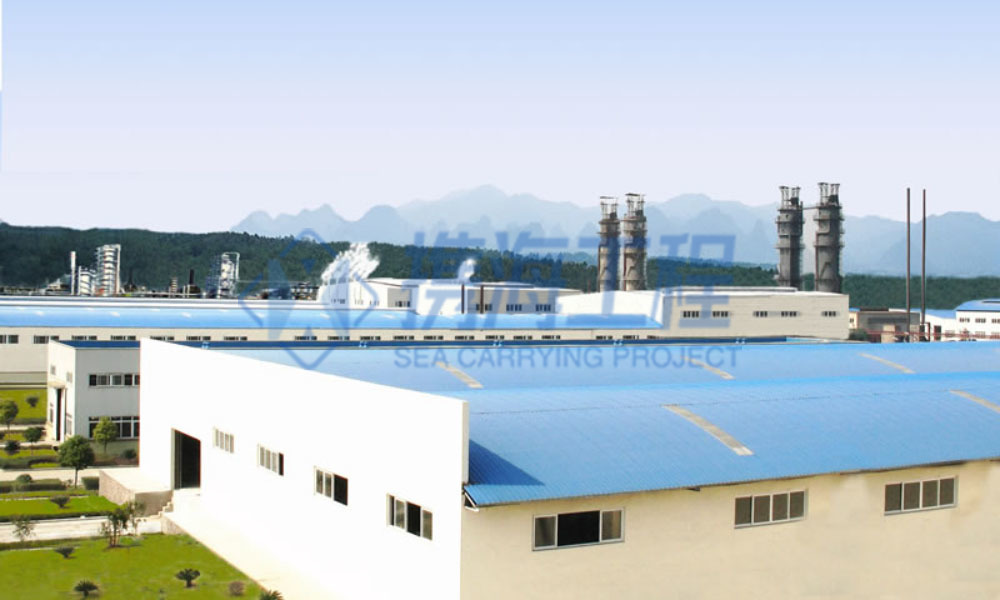
Highlight Advantages
(1) Reasonably utilize the site during the planning and design of the production line, comprehensively balance various resources and needs, and reduce the occupied area.
(2) The production process is designed to be reasonable and smooth, based on the demand for calcium carbonate, fuel, water, electricity, and compressed air, aiming to minimize total project investment.
(3) The product flow design is reasonable, reducing production operating costs.
(4) Select energy-saving equipment and fully implement the principles of energy conservation and consumption reduction.
(5) Diversified product planning and design to meet market and customer demands for different products.
(6) The layout aims to be compact, reducing the intermediate material handling links, minimizing dust generation points, and reducing material transfer and dust; all dust handling at dust generation points uses new, efficient dust collection equipment to ensure that dust emissions in the project meet standards.
Process Flow
Light calcium carbonate is a deep-processed fine product produced from limestone as raw material, which is calcined to generate calcium oxide and carbon dioxide. The calcium oxide is digested and purified, and then carbonated, activated, dehydrated, dried, screened, ground, and packaged through various processes. The production process can be specifically divided into three types based on product performance: light calcium carbonate, active calcium carbonate production lines, and nano calcium carbonate production lines.
(1) Light Calcium Carbonate (PCC)
This process is divided into four sections: calcination, digestion, carbonation synthesis, and drying and packaging.
After screening limestone and fuel of certain specifications, they are sent to the storage bin. The automatic batching system controls the weighing, and the limestone is mixed with a specified amount of fuel. The mixed material is sent into the environmental protection lime vertical kiln through the feeding system, where it undergoes preheating, calcination, and cooling, transforming calcium carbonate into calcium oxide. The calcium oxide is then sent to the top of the storage ash bin via an ash unloading machine and a lock wind ash unloading machine, where it is screened to separate lumps from powder.
Calcium oxide is transported to the storage bin by a belt conveyor, and then uniformly fed into the digester by a quantitative feeder, where it reacts with hot water at a certain temperature for digestion. The digested slurry is purified through a four-stage purification and slag removal system, resulting in a calcium hydroxide emulsion that is sent to the refined slurry tank for standby.
Carbon dioxide is introduced from the top of the mechanized environmental protection vertical kiln into a gravity dust collector and spray tower, foam washing tower, and packing tower for further dust removal and cooling. It then enters the water ring compressor, and the gas from the water ring compressor passes through an oil-water separator before entering the buffer tank, and then from the buffer tank into the synthetic carbonation tower for the synthesis carbonation of the refined slurry. By controlling different reaction temperatures, concentrations, and reaction times, calcium carbonate products of different particle sizes and crystal shapes can be obtained.
The calcium carbonate slurry obtained after carbonation is called熟浆. If the thick slurry does not require activation, it is directly sent to a centrifuge or filter press for dehydration. The dehydrated filter cake is dried in a rotary dryer, and then crushed, sorted, and packaged to obtain the product.
If activation treatment is required, the thick slurry is pumped from the熟浆 tank into the activation tank, and additives are added to obtain active calcium carbonate. After dehydration in a filter press and drying in a dryer, it is ground and classified in a light calcium grinder to obtain the product.
Process Flow Diagram

(2) Active Calcium Carbonate
The production process of active calcium carbonate mainly consists of purification and compression processes, digestion process, carbonation, activation, dehydration, drying, and packaging processes.
① Purification and Compression Process: The calcium oxide sent from the calcium oxide production line contains about 15-18% CO2, with a dust content of less than 30mg/Nm³ and a temperature of about 40°C. After cooling in the spray tower, purification in the foam washing tower, and separation in the gas-water separator, it is mixed with CO2 that has been purified to 95% content from the carbon dioxide purification device, diluted to a CO2 content of 35%, and then pressurized by a compressor for delivery to the carbonation process. In this process, the wastewater generated from cooling and dust removal is treated through neutralization and filter press treatment for recycling.
② Digestion Process: The calcium oxide sent from the calcium oxide production line, with a particle size of less than 30mm, is fed into the digestion tank by a vibrating feeder, where hot water is added. Under mechanical stirring, CaO is converted into Ca(OH)2 emulsion. The chemical reaction of the lime digestion process is as follows: CaO + H2O → Ca(OH)2. After screening to remove impurities, it flows into the coarse slurry tank. It is then purified into refined Ca(OH)2 emulsion through a centrifugal separator and pumped into the aging tank.
③ Carbonation, Activation, Dehydration, Drying, and Packaging Process: The Ca(OH)2 emulsion is screened and enters the carbonation reactor, where it reacts with CO2 gas to generate CaCO3. The carbonation reaction is as follows: Ca(OH)2 + CO2 → CaCO3 + H2O. When the pH of the reactants drops to 7-8, it indicates that the reaction is about to be completed. The post-carbonation reaction liquid is pumped into the coating kettle for activation treatment. After activation, the slurry is sent to a scraper centrifuge for dehydration, and the removed water is recycled to the water tank for calcium oxide digestion. The filter cake containing 25-35% moisture enters the dryer for drying. The evaporated water vapor is discharged by the exhaust fan after being dusted in the spray. The dried finished product is screened by an air separator, automatically packaged, and stored.
Process Flow Diagram

(3) Nano Calcium Carbonate
① Calcium Oxide Digestion Process: The high-activity calcium oxide sent from the lime kiln process, with a particle size of less than 30mm, is fed into the digester by an electromagnetic vibrating feeder and belt scale, where hot water is quantitatively added. Under mechanical stirring, CaO is converted into Ca(OH)2 emulsion. After screening to remove impurities, it flows into the coarse slurry tank. It is then purified into refined Ca(OH)2 emulsion through a centrifugal separator and enters the aging tank for aging treatment.
② Carbonization, activation, dehydration, drying, and packaging processes: The Ca(OH)2 emulsion that has undergone aging treatment and the CO2 gas with a concentration of 45% to 50% delivered via pipeline enter the three-stage carbonization reactor. Under the condition of adding crystal shape control agents, a carbonization reaction occurs to produce CaCO3. The first-stage reactor generates a large number of ultrafine crystal nuclei, the second-stage reactor adds crystal shape control agents to control the growth direction of the nuclei, and the third-stage reactor repairs the nuclei and saturates the carbonization. Mechanical stirring is installed in the second and third-stage carbonization equipment to enhance mass transfer, heat transfer, and gas distribution dissolution rates, thereby increasing the reaction speed. The carbonized reaction liquid is pumped into a modification kettle for modification treatment, and then sent to a plate and frame filter press for filtration. The removed water is recovered to the wastewater storage tank, and after treatment, it is reused as production water. The filter cake containing 35% to 40% moisture enters a double paddle dryer and a disc dryer for drying. The evaporated water vapor is dusted by a pulse bag dust collector and discharged by an exhaust fan. During the production process, high-temperature activated slurry is used for heat exchange with water for digestion, recovering the thermal energy of the high-temperature activated slurry. The wastewater from the plate and frame filter press and equipment washing water is treated using a membrane treatment system. After the water quality reaches the standard for production water, it is supplemented into the production process water to achieve the recycling of water resources. The generated waste residue mainly consists of CaCO3, which is sold as a desulfurizer and raw material for building materials. The dried semi-finished products undergo depolymerization through a cyclone mill, and the classifier screens them. Those that do not meet the standards return to the cyclone mill for further processing, while qualified products are packaged by an automatic packaging machine and stored.
Process Flow Diagram

Technical Parameters
| Production Capacity (10,000 tons/year) | 2 ⁓ 100 | |
| Quality Performance Standards | Active Calcium Carbonate | CaCO3≥95%; pH value: 9.0; Activation degree: 98%; Whiteness: 92%~95%; Oil absorption value: 50% |
| Nano Calcium Carbonate | Average particle size (nm): 20-70; BET (㎡/g): 26; Main content of CaCO3 ≥96%; Whiteness: 95. | |
| Light Calcium Carbonate | Whiteness: ≥93%; Moisture ≤0.3% |
|
| Product Particle Size | Customizable according to customer requirements | |
| Number of working days per year/day | >=330 | |
| Number of operators/(people/shifts) | 5 ⁓ 50 | |
Get more solutions for free
If you are interested in our products, please leave your email, we will contact you as soon as possible, thank you!


Telephone
Company Address
Weier Business 801, No. 92 Huai'an East Road, Yuhua District, Shijiazhuang City, Hebei Province