Expert of Systematic Overall Solution for Calcium Material Resource Utilization

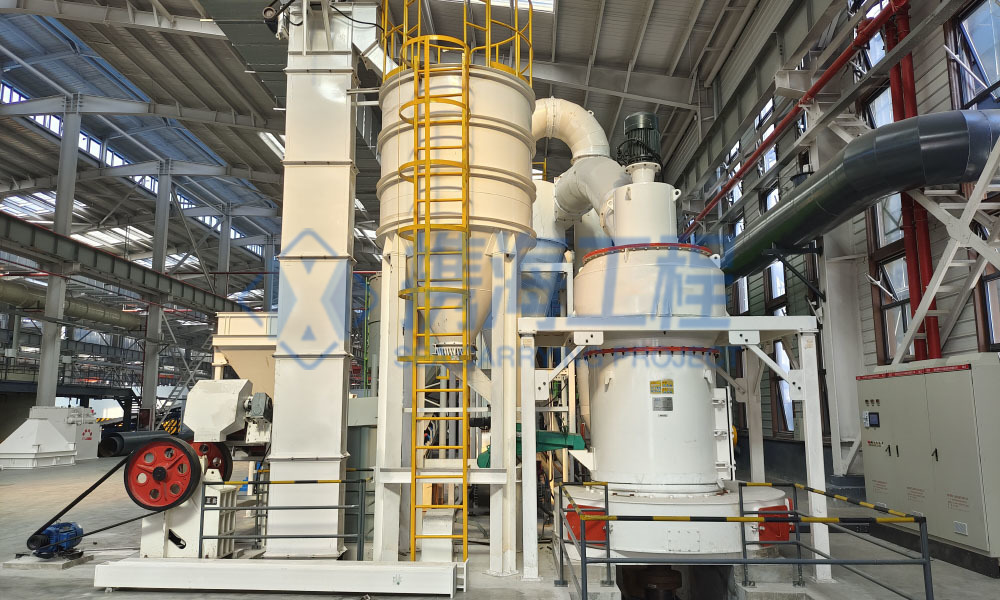
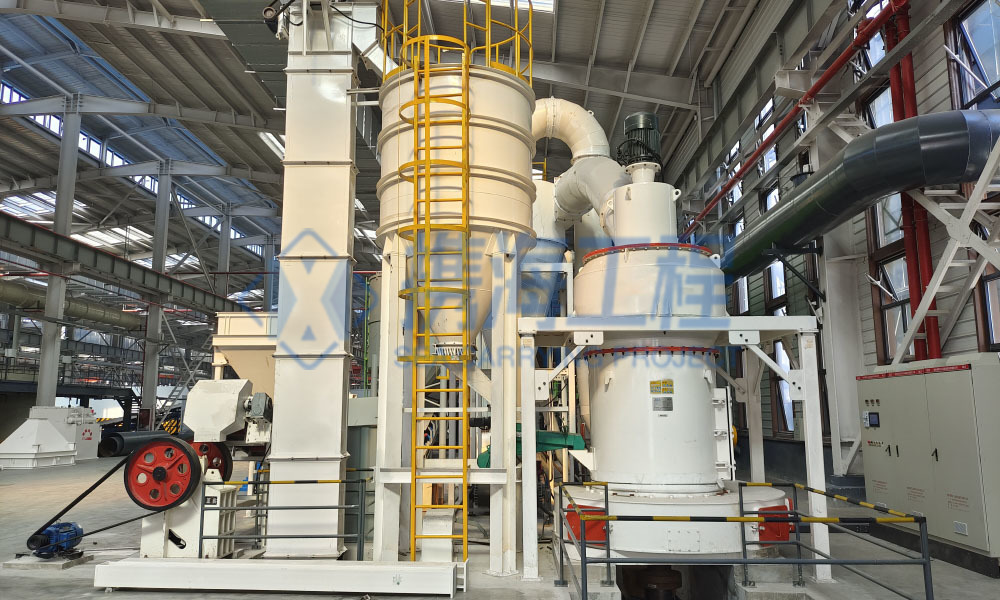
GCC production line
Production Line Introduction:This production line processes natural calcium carbonate ore through a series of deep processing. Heavy calcium (heavy calcium carbonate) is the main product form in the calcium carbonate series, produced using a physical production method that directly grinds materials rich in CaCO3, such as calcite, marble, and shells, using mechanical milling. Calcium carbonate is known as the "grain of industry" and is a major inorganic filler in many industries, including rubber, plastics, papermaking, coatings, inks, daily chemicals, and construction.
Production Capacity:20,000 tons 200,000 tons/year
Raw Materials:Calcium Carbonate
Highlight Advantages
(1) Reasonably utilize the site during the planning and design process of the production line, comprehensively balance various resources and needs, and reduce the occupied area.
(2) The design of product flow lines is reasonable, reducing production operating costs.
(3) Select energy-saving equipment and fully implement the principles of energy conservation and consumption reduction.
(4) Diversified product planning and design to meet the market and customer demands for different products.
(5) The layout aims to be compact, reducing the intermediate transportation of materials, minimizing dust generation points, and decreasing the transfer and dust generation of materials; all dust generation points use new and efficient dust collection equipment to ensure that the dust emissions in the project meet standards.
Process Flow
It should include steps such as ore mining and crushing, coarse crushing, grinding, classification screening, impurity removal, and packaging.
① Ore Mining and Crushing: Extract ore containing calcium carbonate from the mine, such as large blocks of calcite or marble, which need to be initially crushed to obtain larger particle materials.
② Coarse Crushing: Use a crusher to further crush the materials into smaller particles, with an appropriate feed size of less than 2 cm for grinding, and for ultra-fine grinding, control the feed size to be less than 1 cm.
③ Grinding: Use grinding equipment (such as Raymond mills, ball mills, etc.) to grind the crushed particles into fine powder.
④ Classification Screening: Use classification equipment to screen and classify the ground powder to obtain heavy calcium powder products of different particle size specifications.
⑤ Impurity Removal: Perform impurity removal as needed to improve product purity.
⑥ Packaging: Package the qualified heavy calcium powder for storage or sale.

Technical Parameters
| Production Capacity (10,000 tons/year) | 2 ⁓ 100 |
| Quality Performance Standards | Specific Surface Area: about 1m²/g Oil Absorption Value: 40~60mL/100g Whiteness: 89%~93% Moisture Content: 0.2%~0.3% |
| Product Granularity | Customizable according to customer requirements |
| Number of Working Days per Year/Day | >=330 |
| Number of Operators (people/shifts) | 5 ⁓ 50 |
Get more solutions for free
If you are interested in our products, please leave your email, we will contact you as soon as possible, thank you!



Telephone
Company Address
Weier Business 801, No. 92 Huai'an East Road, Yuhua District, Shijiazhuang City, Hebei Province