Expert of Systematic Overall Solution for Calcium Material Resource Utilization

Understanding Conveying Equipment: Key Components and Their Importance in Industrial Applications
Mar 14,2026
In the industrial sector, conveying equipment plays a pivotal role in optimizing workflows and enhancing productivity. These systems are designed to transport materials from one location to another, making them indispensable in various applications, from manufacturing to logistics. Understanding the different types of conveying equipment and their specific applications can help businesses make inf
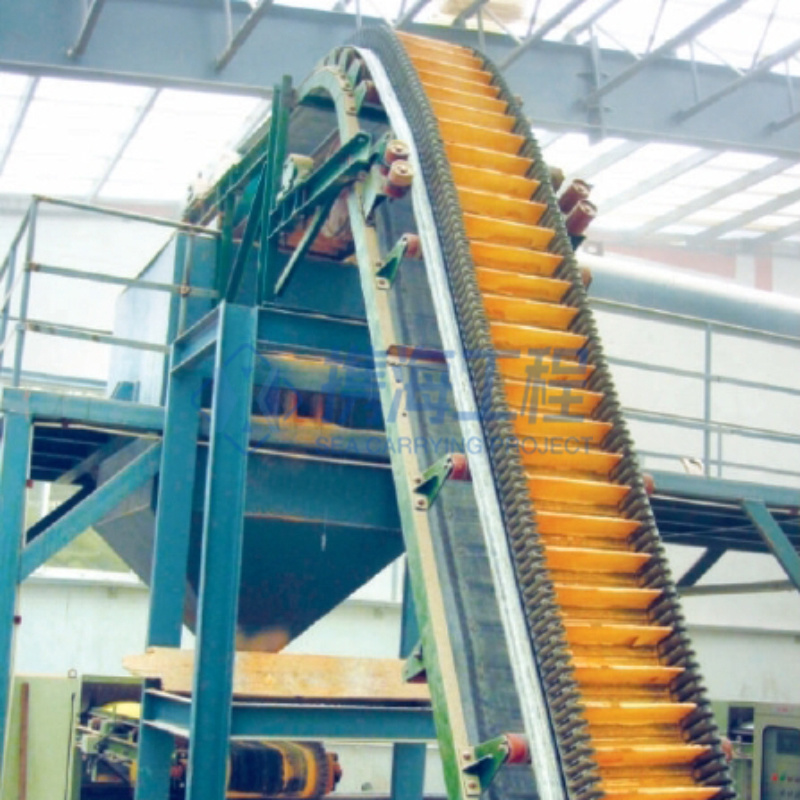
In the industrial sector, conveying equipment plays a pivotal role in optimizing workflows and enhancing productivity. These systems are designed to transport materials from one location to another, making them indispensable in various applications, from manufacturing to logistics. Understanding the different types of conveying equipment and their specific applications can help businesses make informed decisions that improve efficiency and reduce operational costs.
Conveying equipment can be categorized into several types, including belt conveyors, roller conveyors, chain conveyors, and screw conveyors. Each type has unique functionalities that cater to different material handling needs. For instance, belt conveyors are widely used for their versatility and efficiency in transporting bulk materials over long distances. They are ideal for moving items that are not excessively heavy or sharp. On the other hand, roller conveyors are typically employed for transporting packages and pallets, making them a popular choice in warehouses and distribution centers.
Chain conveyors, as the name suggests, utilize chains to move products, making them suitable for heavy loads and harsh industrial environments. These conveyors are often found in automotive and manufacturing plants, where they are used to transport components throughout the production line. Screw conveyors, which use a rotating helical screw blade, are effective for moving granular or powdery materials and are commonly used in agricultural and food processing industries.
The benefits of utilizing conveying equipment are manifold. One of the primary advantages is the significant improvement in operational efficiency. By automating the transport of materials, businesses can reduce manual labor, minimize the risk of injury, and ensure a smoother flow of goods. Moreover, conveying systems can be customized to fit specific layouts and workflows, allowing for greater flexibility in production processes.
Another key aspect of conveying equipment is its contribution to safety and reliability in operations. By providing a controlled environment for material transport, these systems help mitigate risks associated with manual handling. This not only enhances workplace safety but also leads to more consistent product quality.
In conclusion, conveying equipment is a vital element of modern industrial operations. Understanding the various types and their applications can empower businesses to optimize their material handling processes. With the right conveying solutions, companies can achieve higher efficiency, improved safety, and enhanced productivity, ultimately contributing to a more streamlined operational framework. Investing in the appropriate conveying equipment is crucial for any business seeking to stay competitive in today’s fast-paced industrial landscape.
Conveying equipment can be categorized into several types, including belt conveyors, roller conveyors, chain conveyors, and screw conveyors. Each type has unique functionalities that cater to different material handling needs. For instance, belt conveyors are widely used for their versatility and efficiency in transporting bulk materials over long distances. They are ideal for moving items that are not excessively heavy or sharp. On the other hand, roller conveyors are typically employed for transporting packages and pallets, making them a popular choice in warehouses and distribution centers.
Chain conveyors, as the name suggests, utilize chains to move products, making them suitable for heavy loads and harsh industrial environments. These conveyors are often found in automotive and manufacturing plants, where they are used to transport components throughout the production line. Screw conveyors, which use a rotating helical screw blade, are effective for moving granular or powdery materials and are commonly used in agricultural and food processing industries.
The benefits of utilizing conveying equipment are manifold. One of the primary advantages is the significant improvement in operational efficiency. By automating the transport of materials, businesses can reduce manual labor, minimize the risk of injury, and ensure a smoother flow of goods. Moreover, conveying systems can be customized to fit specific layouts and workflows, allowing for greater flexibility in production processes.
Another key aspect of conveying equipment is its contribution to safety and reliability in operations. By providing a controlled environment for material transport, these systems help mitigate risks associated with manual handling. This not only enhances workplace safety but also leads to more consistent product quality.
In conclusion, conveying equipment is a vital element of modern industrial operations. Understanding the various types and their applications can empower businesses to optimize their material handling processes. With the right conveying solutions, companies can achieve higher efficiency, improved safety, and enhanced productivity, ultimately contributing to a more streamlined operational framework. Investing in the appropriate conveying equipment is crucial for any business seeking to stay competitive in today’s fast-paced industrial landscape.




Telephone
Company Address
Weier Business 801, No. 92 Huai'an East Road, Yuhua District, Shijiazhuang City, Hebei Province